


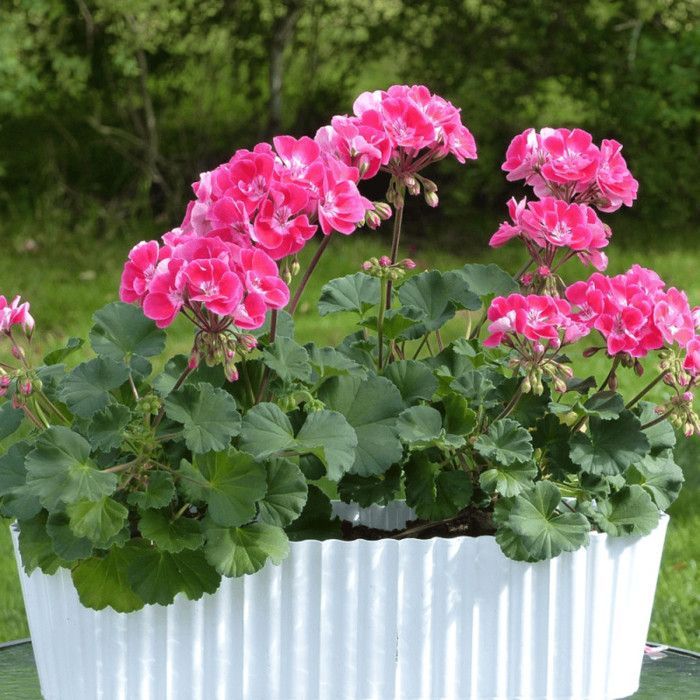

Zonal geranium, scientifically known as Pelargonium hortorum, is a perennial plant native to South Africa. It belongs to the Geraniaceae family. This plant is popular for its ornamental beauty and ease of care, making it a common choice for gardens, borders, pots, and planters.
The leaves can be green or sometimes slightly purple, depending on the variety. Zonal geranium flowers are usually clustered in umbels and come in a variety of vibrant colors, including red, pink, white, and salmon. These flowers often give off a subtle but pleasant fragrance. In terms of cultivation, zonal geranium prefers a sunny location with well-drained soil. It is relatively drought-tolerant once established, but benefits from regular watering during periods of active growth.
This plant can also be fertilized periodically to encourage abundant flowering. In addition, it can be pruned regularly to maintain a compact shape and encourage new growth. Zonal geranium is a versatile plant that can be used in a variety of ways in landscaping. Whether in beds, borders, hanging baskets, or planters, it adds a touch of vibrant color and interesting texture to any outdoor space. Furthermore, this plant is often chosen for its ability to attract butterflies and other pollinators, thus helping to promote biodiversity in the garden.
Comment